Vietnam is one of the world’s leading suppliers of pelagic fish, offering stable volumes, competitive pricing, and year-round sourcing opportunities. Understanding fish seasonality is essential for seafood importers, distributors, and food processors to optimize purchasing timing, pricing, and supply planning.
This guide provides a clear overview of the seasonal availability of five key Vietnamese pelagic fish species, helping buyers identify peak seasons and build efficient sourcing strategies.
Fish seasonality directly impacts:
Supply volume and stability
Pricing competitiveness
Processing yield and quality
Contract planning and forward buying
By aligning purchasing decisions with peak fishing seasons, buyers can secure better prices, more consistent supply, and improved product quality.
This article focuses on five commercially important species widely exported from Vietnam:
Bullet Tuna
Skipjack Tuna
Round Scad
Baby Layang Scad
Yellow Stripe Trevally
These species are popular across Asia, Europe, the Middle East, and North America due to their versatility, affordability, and strong consumer demand.
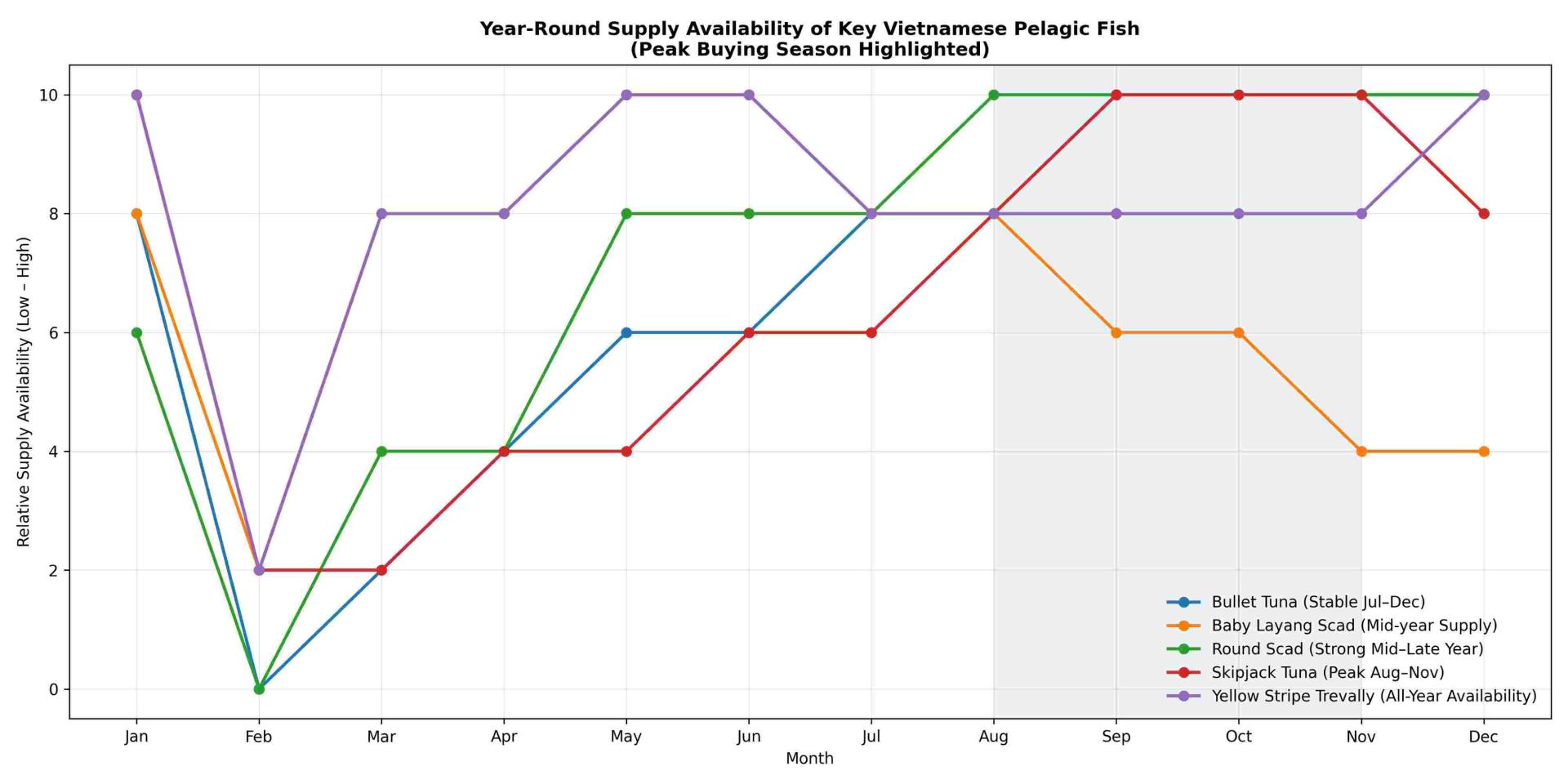
This chart illustrates the year-round supply availability of key Vietnamese pelagic fish species. Peak buying season typically falls between August and November, when catch volumes are highest and pricing is most competitive.
Bullet Tuna shows relatively low availability in early months, especially February. Supply gradually increases from April and becomes stable and abundant from July to December, making it ideal for mid-year and year-end sourcing programs.
Best buying period: July – December
Best use: Frozen whole round, loins, value-added processing
Skipjack Tuna is one of Vietnam’s most important export species. While availability is moderate in the first half of the year, peak supply occurs from August to November, when catch volumes are highest and prices are most competitive.
Best buying period: August – November
Best use: Canning, loins, cooked and frozen tuna products
Round Scad offers one of the most stable supply profiles among pelagic fish. Availability improves significantly from May and remains strong through December, making it a reliable option for long-term contracts and steady distribution programs.
Best buying period: May – December
Best use: Frozen whole round, foodservice, retail packs
Baby Layang Scad reaches peak availability between May and August. After this period, supply gradually declines toward the end of the year. This species is well suited for short-term promotions and seasonal programs.
Best buying period: May – August
Best use: Retail frozen packs, traditional markets, foodservice
Yellow Stripe Trevally stands out for its consistent, year-round availability, with multiple peak points during the year. This makes it an excellent choice for buyers seeking stable supply without strong seasonal risk.
Best buying period: All year
Best use: Frozen whole fish, fillets, value-added products
Across all five species, August to November (Q3–Q4) represents the best overall buying window, offering:
Higher catch volumes
More stable supply
Better price negotiation opportunities
Ideal timing for annual contracts and forward orders
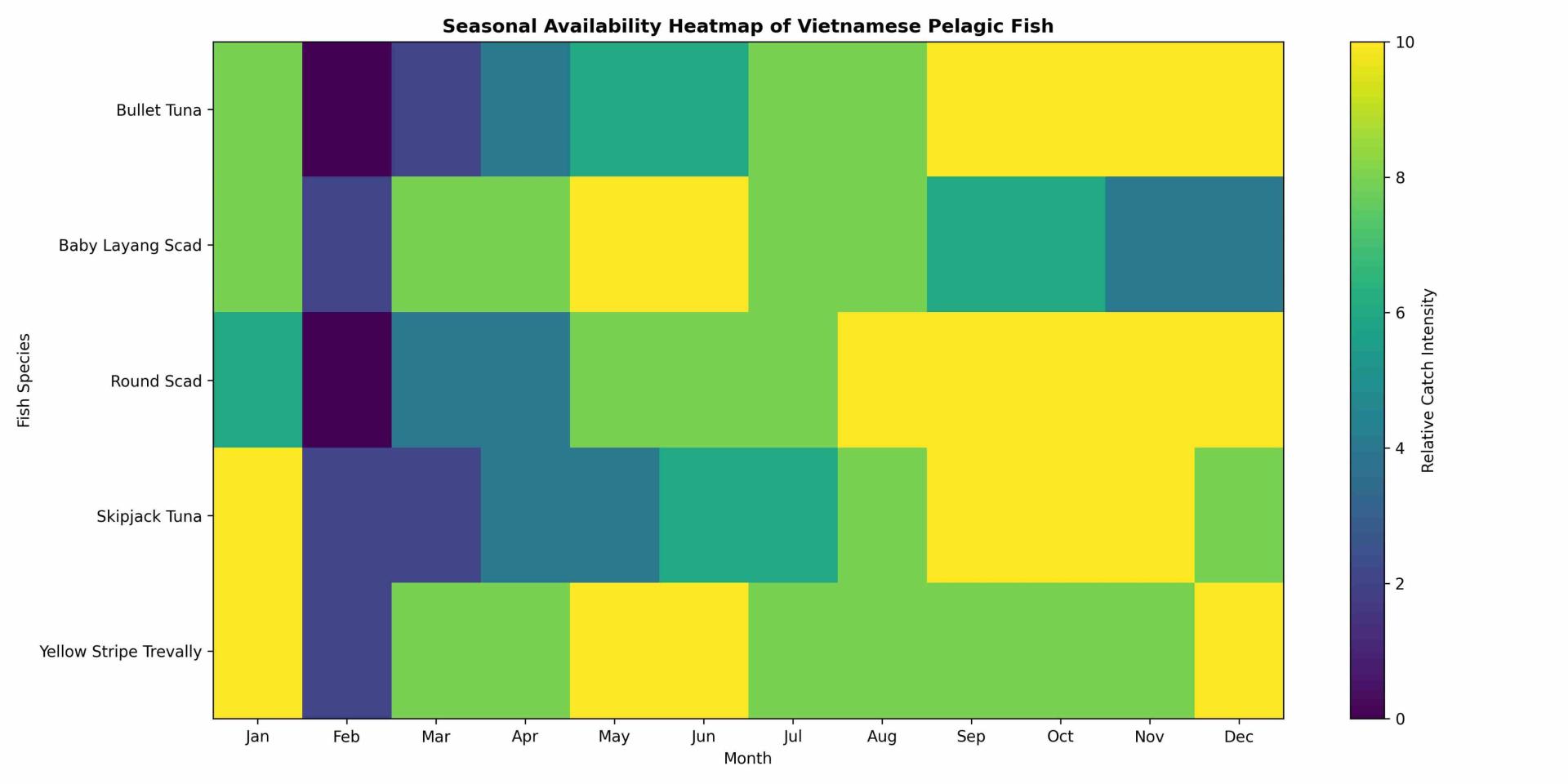
Seafood buyers can optimize sourcing by:
Planning annual contracts during peak seasons
Using stable species like Round Scad and Yellow Stripe Trevally for baseline supply
Leveraging peak Skipjack Tuna season for volume-driven promotions
Diversifying species to reduce seasonal risk
Vietnam’s pelagic fish industry offers strong sourcing opportunities throughout the year. However, understanding seasonal availability patterns allows buyers to make smarter purchasing decisions, improve cost efficiency, and secure reliable supply.
By aligning buying strategies with fish seasonality, importers can gain a clear competitive advantage in today’s global seafood market.
The best overall buying season is from August to November, when supply volumes are highest and prices are most competitive.
Yes. Species like Yellow Stripe Trevally and Round Scad offer stable, year-round or long-season availability.
Skipjack Tuna reaches its peak supply between August and November, making it ideal for large-volume purchases.
During peak seasons, higher catch volumes reduce supply pressure, allowing exporters to offer more competitive prices.


