

Dried Loligo Squid Skin-On (Loligo edulis / Loligo chinensis) – Mực Khô, Vietnam Supplier
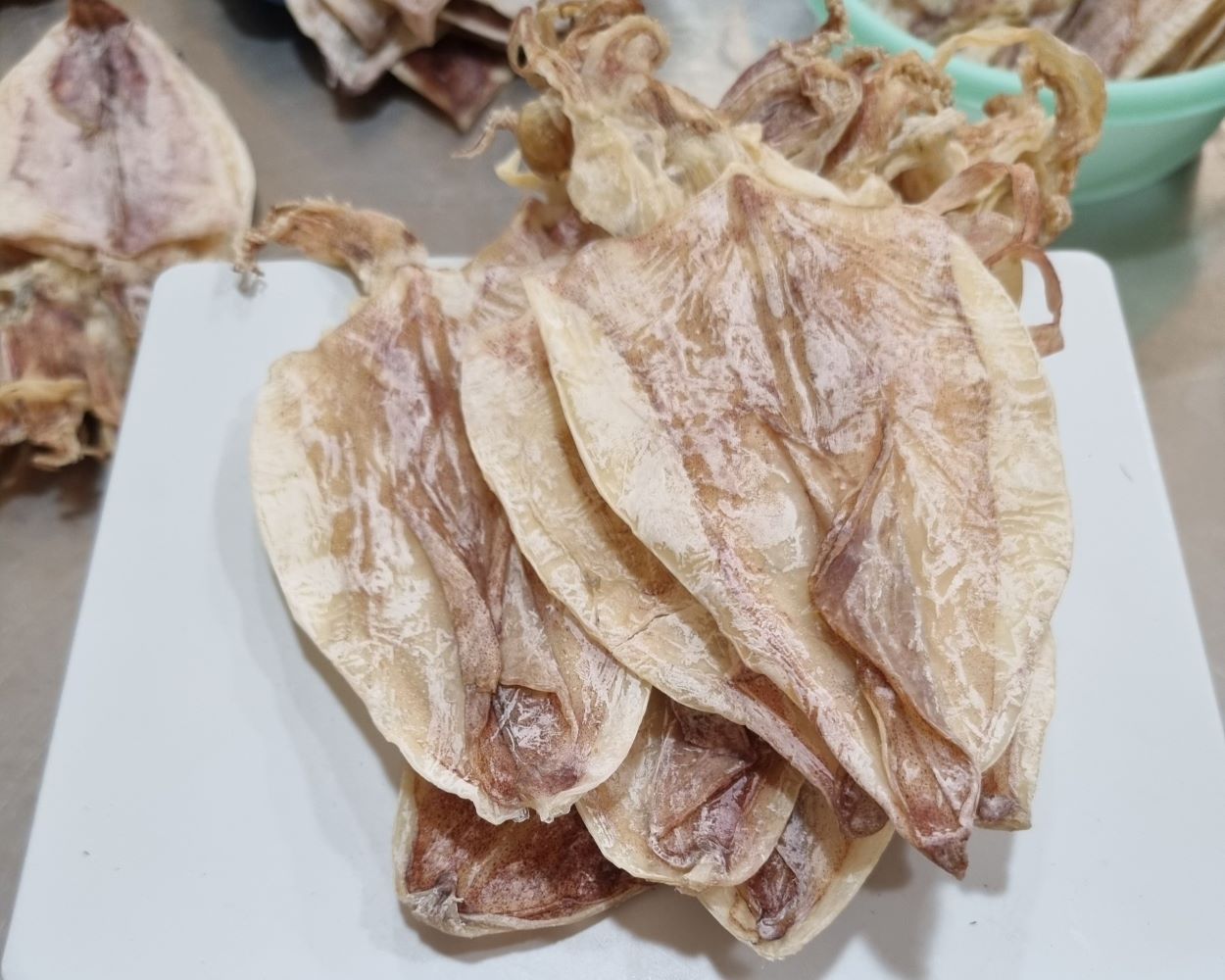
Dried Loligo Squid Skin-On, known as Mực khô in Vietnamese, is a beloved snack across Asia's coastal traditions - supplied wholesale from Vietnam by Baseafood. With its rich umami flavor, chewy texture and long shelf life, it is a staple snack in Vietnam, Korea, China and Japan, enjoyed with beer, sake or soju, or simply on its own.
Baseafood supplies Dried Squid in whole, skin-on, with moisture 40% and size ranges 6/8, 8/10, 10/12, 12/15, 15/17, 17/20, 20/25, 25/30 cm/pc.
Baseafood's export codes for Dried Squid are HK 242 and HK 173, certified with HACCP, BRC, HALAL, IFS, ISO22000, FDA, EU registered.
Key Takeaways
- Species:Loligo edulis and Loligo chinensis.
- Form: whole, skin-on, naturally dried.
- Moisture: 40%.
- Sizes: 6/8, 8/10, 10/12, 12/15, 15/17, 17/20, 20/25, 25/30 cm/pc
- Packing: bulk, 10 kg/CTN.
- Key markets: Vietnam, Korea, China, Japan, and Asian communities worldwide.
- Origin: Vietnam — wholesale B2B supplier & exporter.
What Is Dried Squid (Loligo edulis / Loligo chinensis)?
Dried squid is typically made from squid species belonging to the Loligo genus — mainly Loligo edulis and Loligo chinensis. These species are prized for their tender flesh and mild oceanic flavor, making them ideal for natural drying. Despite different names across Asia, this delicacy holds universal popularity as a protein-packed snack.
| Market | Common name |
|---|---|
| Vietnam | Mực khô |
| Korea | 마른 오징어 (mareun ojingeo) |
| China | 干鱿鱼 (gān yóu yú) |
| Japan | 乾燥イカ (kansō ika) |
Dried Squid Product Specifications
| Product | Dried Loligo Squid, Skin-On |
| Scientific name | Loligo edulis, Loligo chinensis |
| Form | Whole, skin-on, naturally dried |
| Moisture | 40% |
| Sizes | 6/8, 8/10, 10/12, 12/15, 15/17, 17/20, 20/25, 25/30 cm/pc |
| Packing | Bulk, 10 kg/CTN |
| Origin | Vietnam |
Size Grading System for Dried Loligo Squid
Dried Loligo Squid, Skin-On is graded using two parallel systems: by body length in centimeters, and by trade grade code with a corresponding pieces-per-kilogram range. Buyers can order by either system — confirm with Baseafood which grading convention your market or recipe requires.
Grading by Length (cm)
| 6–8 cm | 8–10 cm | 10–12 cm | 12–15 cm | 15–17 cm | 17–20 cm | 20–25 cm |
|---|
Grading by Trade Code (pcs/kg)
The trade grade code system is widely used in the dried squid export trade, particularly for buyers in Korea, China, and Japan. Larger squid (fewer pieces per kilogram) carry the "S" prefix grades, while smaller squid (more pieces per kilogram) use higher numbered grades.
| SSAAAA | SAAAA | 1AAAA | 2AAAA | 3AAAA | 3AAAAN | 4AAAA | 5AAAA | 6AAAA |
|---|---|---|---|---|---|---|---|---|
| 7–12 pcs/kg | 12–15 pcs/kg | 16–20 pcs/kg | 20–30 pcs/kg | 35–40 pcs/kg | 50–55 pcs/kg | 70–80 pcs/kg | 100–130 pcs/kg | 180–220 pcs/kg |
How Dried Squid Is Processed?
Dried squid is made by cleaning and flattening fresh squid before drying it naturally under the sun or using warm-air dryers. This process removes moisture while retaining nutrients and flavor, resulting in a chewy, savory product that lasts for months without preservatives. High-quality dried squid has a slightly translucent surface, a pleasant oceanic aroma, and a firm but pliable texture — with no artificial seasoning, keeping it natural and nutritious.
Dried Squid Nutritional Value (per 100 g)
| Nutrient | Approx. value |
|---|---|
| Calories | ~300 kcal |
| Protein | ~60 g |
| Fat | ~4 g |
| Carbohydrates | ~2 g |
Dried squid is an excellent source of lean protein — ideal for athletes, fitness enthusiasts, and anyone seeking a high-protein, low-carb snack. It is also rich in vitamin B12, which supports nerve function and energy metabolism, along with zinc and selenium, essential for immune health and antioxidant protection.
Culinary Uses and Serving Suggestions for Dried Squid
Traditionally, dried squid is toasted lightly over an open flame or in a dry pan. As it heats, natural sugars caramelize, releasing a smoky aroma and making the flesh slightly crisp. Once toasted, it pairs well with:
- Mayonnaise + chili sauce — a creamy, spicy dip.
- Soy sauce + vinegar + chopped chili — a tangy Asian-style flavor.
In modern Asian cooking, dried squid is also shredded and mixed into Korean stir-fries (Ojingeo Bokkeum), used as a topping for Japanese okonomiyaki, or added to Chinese hotpots for umami depth.
Dried Squid in East Asian Culture
Mực khô in Vietnam
In Vietnam, Mực khô is more than food — it's part of social gatherings, beach picnics and street-side beer sessions, often grilled over charcoal and dipped in spicy sauces.
마른 오징어 in Korea
Dried squid (mareun ojingeo) is synonymous with good times in Korea — a classic anju (snack served with alcohol), often paired with beer or soju, valued for its addictive chewy texture and salty flavor.
干鱿鱼 in China
Across Chinese markets, dried squid is sold in strips or whole sheets, loved for its rich umami taste as a go-to street food for all ages.
乾燥イカ in Japan
In Japan, kansō ika is found at festivals, izakayas and souvenir shops — its balance of chewiness and saltiness makes it a perfect companion to sake.
How to Identify High-Quality Dried Squid
- Light golden-brown color
- Slightly glossy surface
- No visible mold or dark spots
- A natural ocean scent, not overly fishy
Store in an airtight container or vacuum-sealed pack, in a cool, dry place away from sunlight. Once opened, refrigerate or freeze to extend shelf life.
B2B Applications for Dried Squid
- Ethnic grocery & convenience retail: serves Vietnamese, Korean, Chinese and Japanese diaspora markets worldwide.
- Bar/anju snack distribution: a staple beer/sake/soju pairing snack for bars and izakaya-style venues.
- Food manufacturing: shredded or processed for stir-fries, okonomiyaki toppings and hotpot ingredients.
Why Source Dried Loligo Squid from Baseafood Vietnam
As a dried squid supplier and exporter in Vietnam, Baseafood supplies Loligo squid in whole, skin-on, naturally dried form across five size grades to meet different market and packaging needs. Related items include our frozen Loligo squid range — Whole Round, Tube, Ring, Head/Tentacle — and the full Dried Seafood range.
Frequently Asked Questions about Dried Loligo Squid
What species is used for dried squid?
Typically Loligo edulis and Loligo chinensis, known for their tender flesh and mild flavor — the same species Baseafood uses across its frozen Loligo squid product range.
What sizes and moisture level are available?
Sizes range from 6/8, 8/10, 10/12, 12/15, 15/17, 17/20, 20/25, 25/30 cm/pc, at 40% moisture, packed in bulk 10 kg cartons.
How should dried squid be prepared before eating?
Toast it lightly over a flame or in a dry pan until aromatic, then cut into strips. Serve with mayonnaise and chili, or soy sauce with vinegar and chopped chili.
Is dried squid healthy?
Yes. It is high in protein (~60g/100g), low in fat, and rich in vitamin B12, zinc and selenium.
How long can dried squid be stored?
Up to 6-12 months in a cool, dry place; refrigerate or freeze once opened.
Contact Baseafood — Vietnam Dried Squid Supplier & Exporter
For quotations or samples of Dried Loligo Squid Skin-On, please contact our sales team:
Ms. Nguyen
Email: nguyen.thao@baseafood.net
WhatsApp: +84 702 520 288